Appointments are required to visit. Please schedule yours in advance.
Schedule a VisitCollections
Stories Preserved for Future Generations
Introduction
Every collection that comes through HARC’s doors carries more than paper and photographs — it carries the daily record of women who built schools, hospitals, and communities long before anyone thought to write their names down. Our job is to make sure those records survive long enough for someone else to ask the questions we haven’t thought of yet.
That work looks different depending on the material. A ledger from the 1890s needs a different kind of care than a photograph from the 1970s, and both need something different again from the digital files arriving on our desks today.
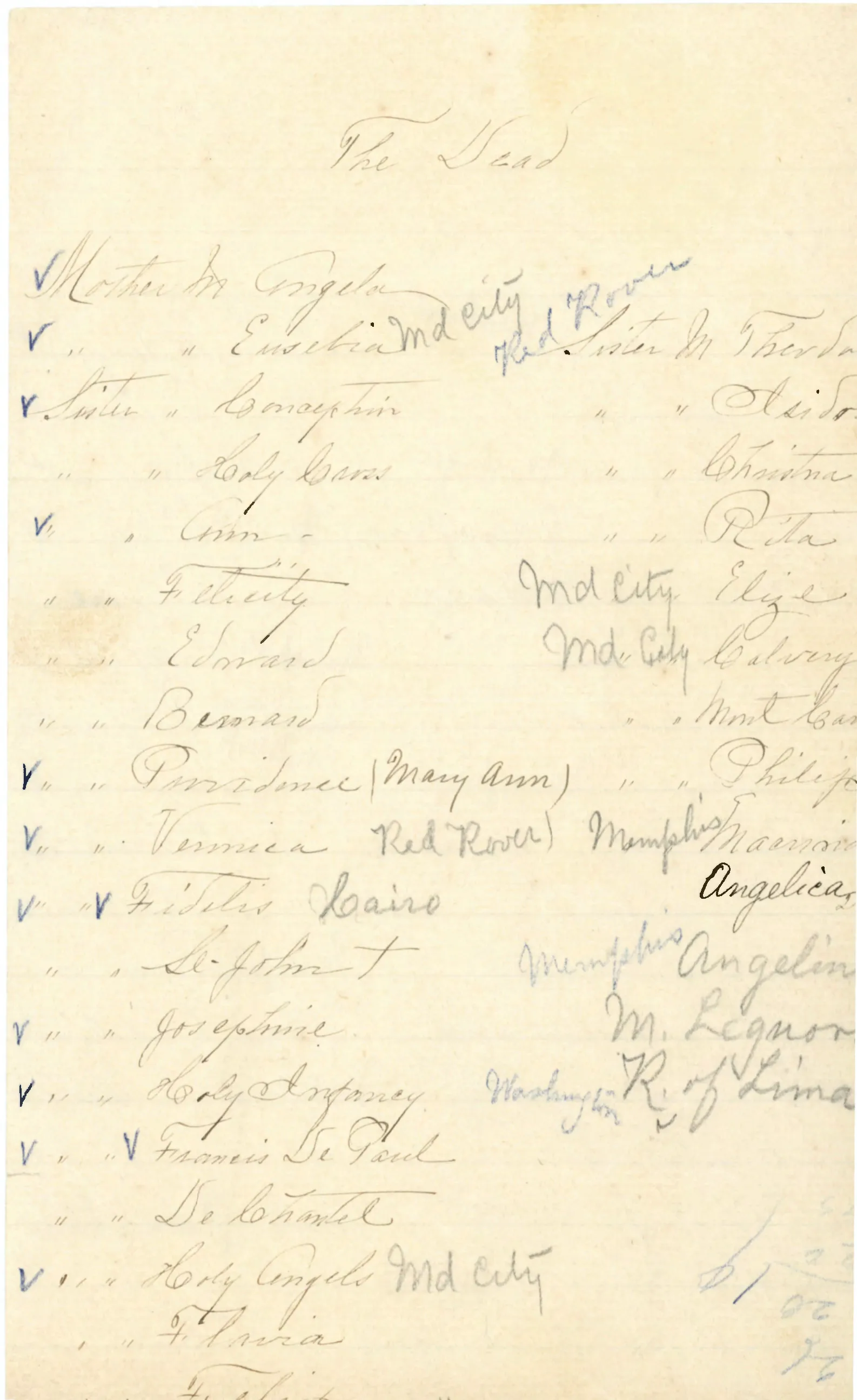 A ledger page from one of the congregation’s earliest record books, still legible after more than a century.
Preservation is never a single act — it’s a habit repeated for decades.
Climate-controlled storage slows decay, but it doesn’t stop the clock. Every few years, our archivists return to the same boxes: checking for fading ink, brittle paper, and the slow chemical breakdown that no storage room can fully prevent.
Digitization helps, but it isn’t a shortcut. Scanning a fragile document safely often takes longer than reading it would. Each image has to be checked against the original for accuracy before it’s cataloged and cross-referenced with everything else we know about the people and events it describes.
“You don’t preserve a story by freezing it in place. You preserve it by making sure someone can still find it, still read it, and still understand why it mattered.”
That’s the real goal behind every acid-free folder and every hour spent labeling a finding aid: not a perfectly sealed archive, but one that stays usable. A collection nobody can access is no better preserved than one left in an attic.
It’s slow, unglamorous work, and most of it will never be seen by the researchers who eventually benefit from it. That’s fine. It was never meant to be seen — only to hold up when someone finally comes looking.
Conclusion
None of this happens without the congregations who chose to keep their records in the first place, often with no expectation that anyone outside their own community would ever read them. We’re grateful for that foresight, and for the chance to carry it forward.
If you’re researching a congregation, a school, or a family connected to this history, we’d like to help you find what you’re looking for.
Discover
Engage With the Legacy
HARC offers multiple ways to explore, learn, and connect with the legacy of women religious.
Explore
Visit & Experience
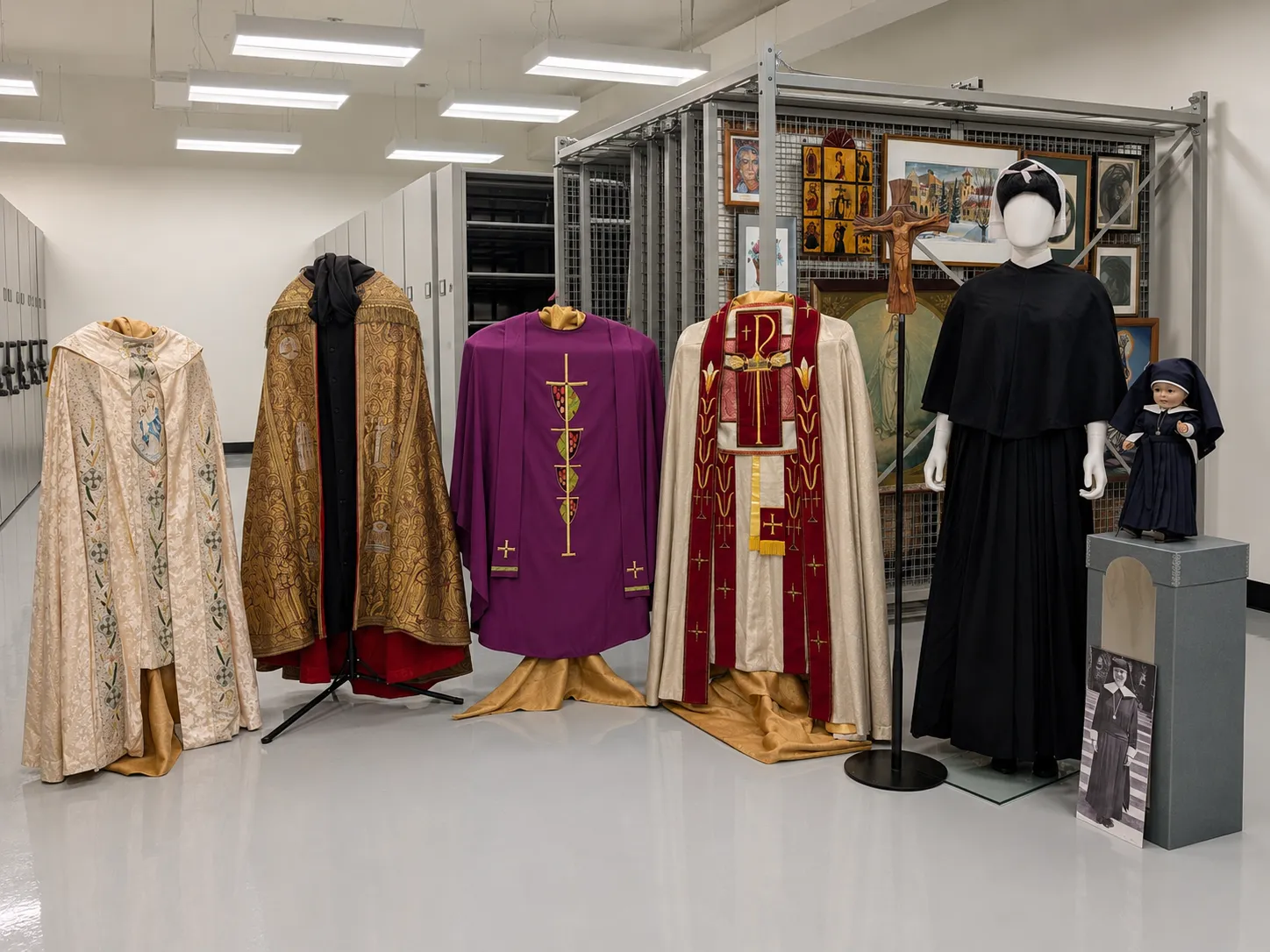
Explore exhibitions and guided visits that connect you to the stories and impact of women religious.
Learn
Research the Collections
Access archival materials and primary sources that support academic study, writing, and discovery.
Connect
Access Digital Collections
Browse thousands of digitized documents from your home or library.