


Appointments are required to visit. Please schedule yours in advance.
Schedule a VisitSisters of St. Francis of the Holy Cross (OSF)
Sisters of St. Francis of the Holy Cross (OSF)
Founded
1868
Location
Green Bay, Wisconsin
Key Contributions
Education, Immigration Ministry, Environmental Sustainability
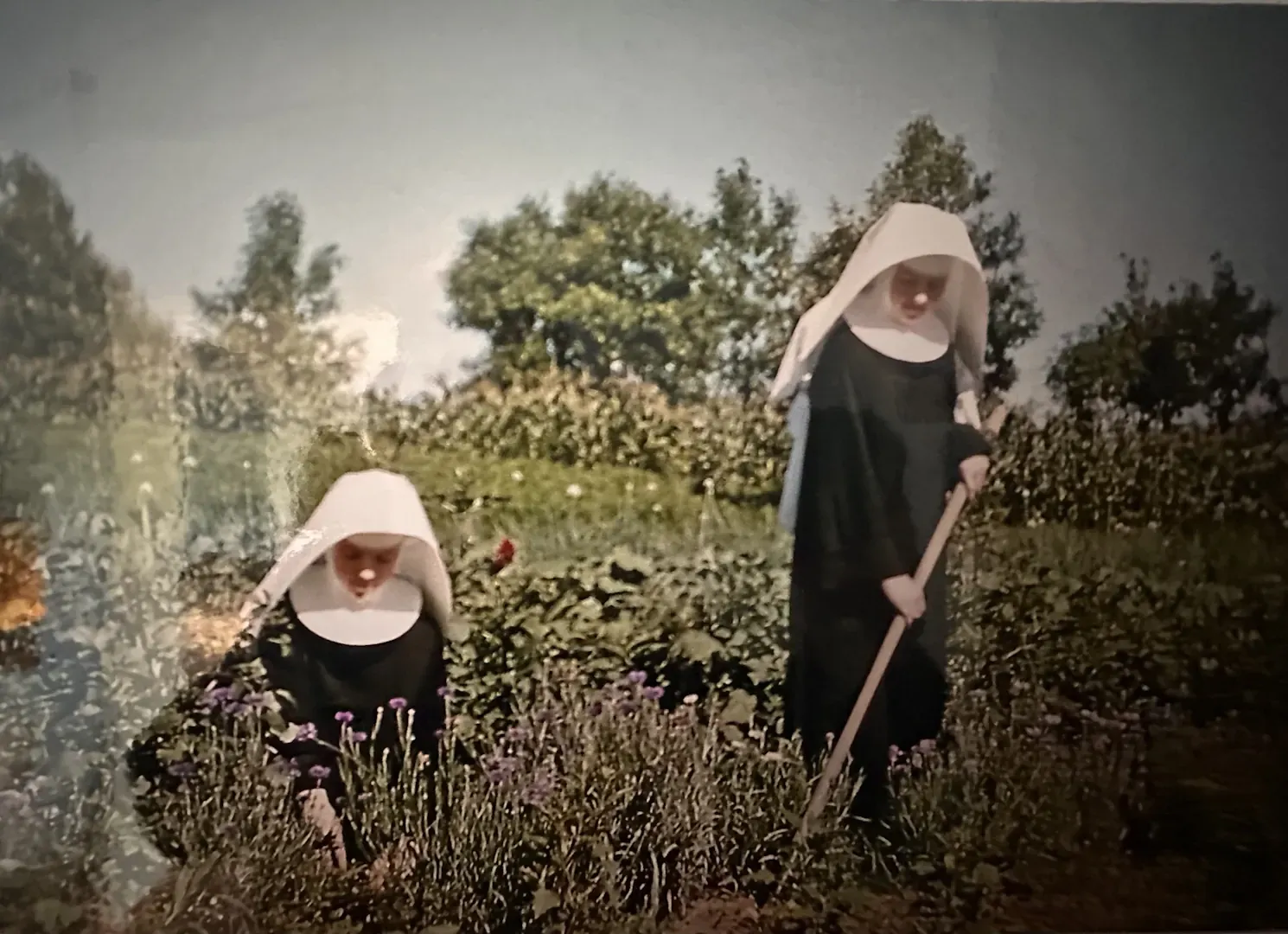
Who They Are
In the mid-1800s, Bay Settlement (now Green Bay) of Wisconsin was a thriving hub for Belgians and European immigrants. The Sisters of St. Francis of the Holy Cross was established to unite these communities through a shared education and faith.
Guided by Franciscan values, the congregation aims to
Compassionately respond to the needs of our times through prayer, presence and hospitality.
Over 150 years of service, they’ve carried out this mission with ministries in education, sustainability, and more.
These activities are guided by their charism, or driving purpose. It calls them to “proclaim the good news of Jesus Christ” through “Gospel living, rooted in the Cross, Word, and Eucharist.”
Their Story
In 1852, Father Edward Francis Daems moved to the rapidly growing Bay Settlement to minister to recent European immigrants. He quickly made a name for himself as a talented educator and pastor, but he found it challenging to bring together people from different countries. They often spoke different languages and didn’t share the same educational backgrounds.
Father Daems built a one-room parish school to create a common space for immigrant children. In 1868, four women religious responded to his call to minister at the school. They followed the Rule of St. Francis as they educated students about the Catholic faith and faced the many hazards of frontier life.
The sisters established themselves as an official diocesan community in 1881. By the end of the nineteenth century, 20 women had joined the congregation. As their ranks grew, they expanded their outreach from one school to six. They later branched out to other locations in Wisconsin, including Robinsonville and Madison.
The congregation remained mostly focused on religious education until the 1960s and 1970s. Inspired by the documents of Vatican II, they began providing educational outreach and pastoral services to new communities. They ministered to Appalachian people, members of the Oneida Nation, migrant workers, and Nicaraguans, among others.
Along with their educational programs, the sisters have always been staunch advocates for social justice. As they continue to respond to changing needs, they strive to uphold human dignity, promote peace, and teach Gospel Justice.
Contributions and Legacy
Building on the work of Father Daems, the Sisters of St. Francis have always prioritized educational ministries.
Many of these acts of service took place at the Chapel of Robinsonville, which the congregation took over in 1902. They educated children with physical and intellectual disabilities during the early twentieth century. After World War II, they adapted the Chapel from an elementary school to a center for the religious education of young women.
Healthcare is another core part of the congregation’s mission. For example, the sisters wrapped bandages during World War II, helping soldiers receive care in the field. In Allouez, they ministered to the elderly at the McCormick Memorial Home.
The sisters are also vocal advocates for environmental sustainability. In 2014, they installed 416 solar panels at their motherhouse in Green Bay. Visitors can take a self-guided tour to learn about solar power and explore a prairie garden.

In the Archives
The Sisters of Saint Francis of the Holy Cross Collection at the Heritage and Research Center contains 155 linear feet of materials. This collection features documents, photographs, and other materials related to their missions and ministries since 1868.
Connect With the Congregation
Visit the Sisters of St. Francis of the Holy Cross (OSF)'s website or email mail@gbfranciscans.org.