


Appointments are required to visit. Please schedule yours in advance.
Schedule a VisitSisters of Charity of the Blessed Virgin Mary
Sisters of Charity of the Blessed Virgin Mary (BVM)
Founded
1833
Location
Dubuque, Iowa
Key Contributions
Education, Healthcare, Social Justice
Who They Are
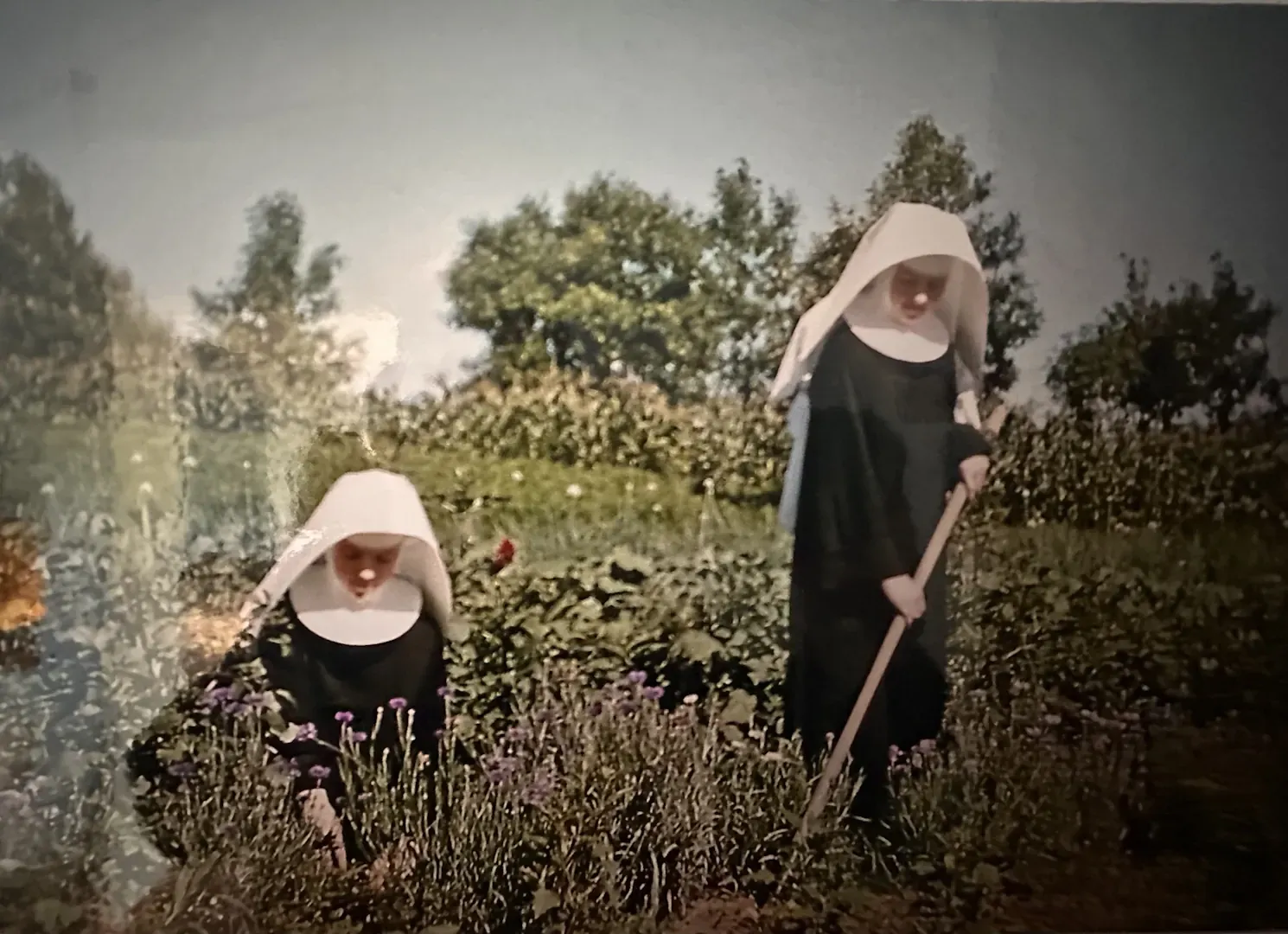
The Sisters of Charity of the Blessed Virgin Mary (BVM) are pioneers in every sense of the word. Founded in 1833, they began their ministries by educating children on the rugged American frontier. They served communities in need across nine states and in other countries.
The charism, or guiding purpose, of the sisters is to
Live the mission of Jesus through our core values of freedom, education, charity, and justice.
They devote particular attention to women and the poor.
The congregation carries out this mission through ministries in education, social justice, and other areas. These activities are part of their commitment to “a vowed life of faithfulness to the Lord; faithfulness to one another in community; [and] faithfulness to God’s people.”
Their Story
The history of the BVM Sisters has always been shaped by movement. The congregation’s roots trace back to Dublin, Ireland. In 1832, Mary Frances Clarke and four other women founded a school for girls called Miss Clarke’s Seminary.
The next year, the women immigrated to Philadelphia, Pennsylvania, to educate the children of Irish immigrants. They soon made vows as a religious congregation.
However, this cross-Atlantic journey was only the beginning of their travels. Ten years later, the sisters answered an invitation from Bishop Mathias Loras to migrate to the rapidly expanding Iowa Territory. They soon built their first motherhouse in St. Joseph on the Prairie.
By 1843, the Sisters had established St. Mary Female Academy. They educated the children of farmers and settlers, providing Catholic education in pioneer territory. Like the congregation itself, this school has evolved many times, eventually becoming Clarke University.
Under the leadership of Mary Frances, the BVM Sisters founded nine boarding schools and staffed 150 parish schools. Their ministries soon stretched from New York to California and Phoenix, Arizona. At each location, the sisters followed Mary Frances’ progressive educational philosophy. She encouraged the women religious to “incite the students to ascertain for themselves.”
In the 1960s, the BVM Sisters embraced change once again in response to the Second Vatican Council’s call to renewal. They branched out internationally, serving communities in Ghana, Ecuador, and Guatemala. They also began new ministries beyond education, including healthcare, counseling, pastoral service, and substance abuse treatment.
Contributions and Legacy
The Sisters of Charity of the BVM have built a wide-reaching legacy in educational ministry. This history shapes one of their core values: “Through education, we recognize our gifts and develop our potential, and draw these out in others. We recognize our interdependence and become whole and integrated.”
Since the frontier days, the sisters have founded and taught in many parish schools across the United States. Several of these institutions still serve students today. One example is Carmel Catholic High School in Mundelein, Illinois, which provides a Catholic education to both boys and girls.
Children aren’t the only group served by the sisters. They also teach other vulnerable communities. For instance, the Roberta Kuhn Center in Dubuque, Iowa, offers mental and spiritual enrichment for the elderly. Meanwhile, the Center for Working Families in Quito, Ecuador, offers vocational training for adults and programs for children with disabilities.
Over the years, the congregation has also turned its attention to healthcare. In Ecuador, they founded Damien House, a residential hospital that treats people affected by Hansen’s disease. In the United States, many sisters serve as chaplains in hospitals and prisons.
The BVM Sisters have also made lasting contributions to social justice. During the Civil Rights Movement, members of the congregation participated in the Selma-to-Montgomery marches. The women religious have also partnered with many organizations to advocate for anti-human trafficking, immigration reform, nonviolence, and other social issues.

In the Archives
The Heritage and Research Center houses approximately 1,500 linear feet of membership records, photographs, legal records, and other archival materials. The collection traces the history of the BVM sisters from their founding in 1833 to the present. Highlights of the collection include materials related to the 1958 fire at Our Lady of the Angels School in Chicago and the 1965 Selma to Montgomery March. It also features materials about Sister Mary Kenneth Keller, one of the first American women to receive a Ph.D. in computer science.
Connect With the Congregation
Visit the Sisters of Charity of the Blessed Virgin Mary (BVM)'s website or email bvmcenter@bvmsisters.org.